
String inverters, microinverters and optimizers
Inverter Replacement in Surprise, AZ
The inverter is the part most likely to fail in a Valley solar system. We confirm it is the problem, then replace it correctly.
- Free written estimate after we look at the inverter, the array and the monitoring data
- Itemized pricing: parts, labor, roof work and any permit or utility paperwork on separate lines
- We tell you before work starts whether a permit, inspection or utility form applies to your repair
The Box That Usually Fails First
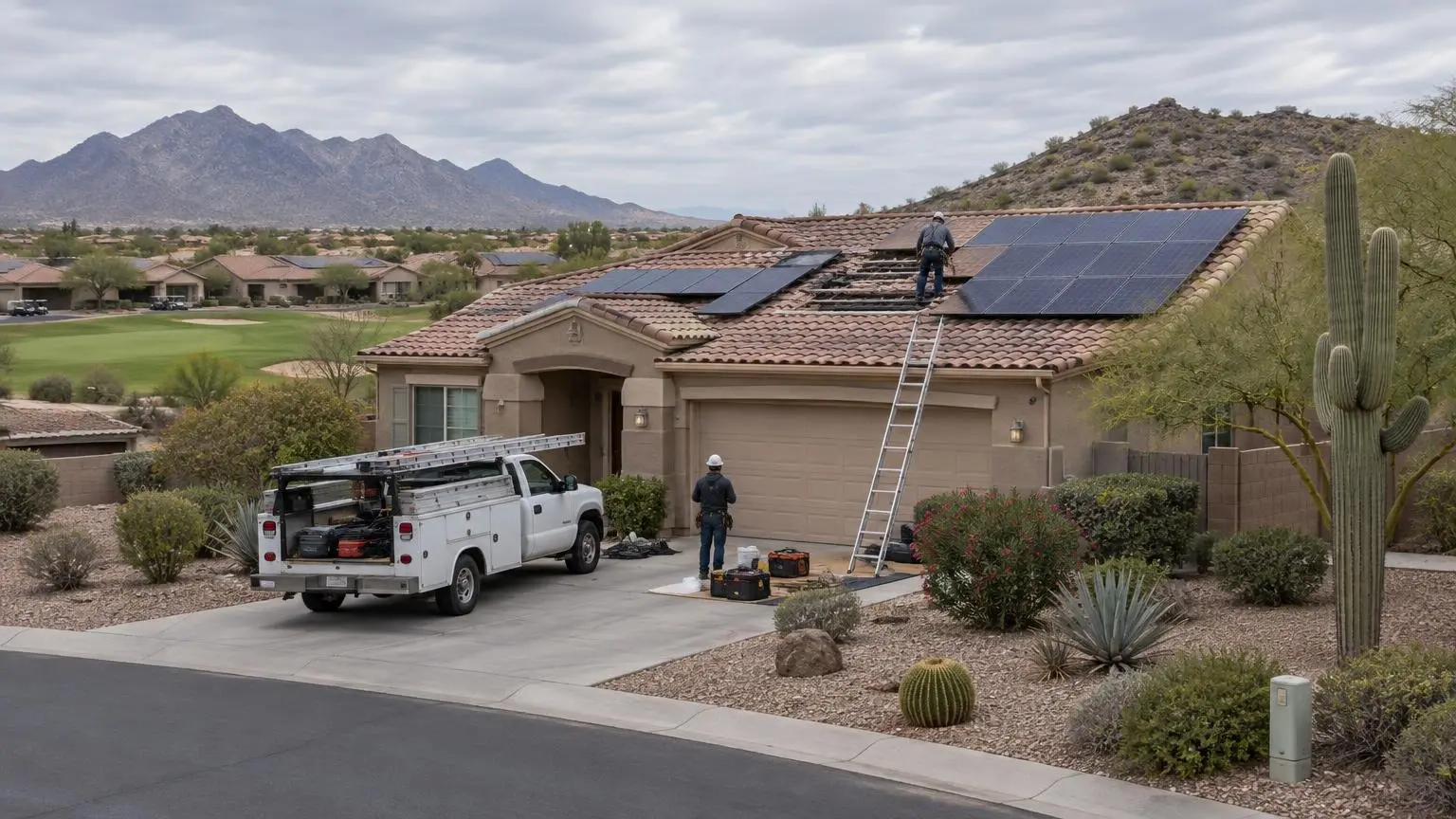
Inverter Replacement is often the first major repair a rooftop solar system in Surprise needs. Panels can keep working for decades, but the inverter that turns their DC power into the AC your house uses is packed with electronics that age with heat. When it quits, the array can be in perfect shape and still produce nothing at all.
Signs the inverter is the problem
- A red, orange or blinking fault light, or an error code on the screen
- Zero production on a sunny day while the panels look fine
- The unit shuts off every summer afternoon and comes back in the evening
- A loud buzz, burning smell or a case that is hot to the touch
- On a microinverter system, one or more panels showing zero in the app
Not every fault light means a dead inverter. A tripped breaker, a ground fault in the wiring or a grid voltage problem can trigger the same codes, which is why we test before quoting a replacement.
Why heat matters so much here
Inverters store energy in capacitors that wear out faster when they run hot, and the long-term weather record at Phoenix Sky Harbor counts about 111 days a year at or above 100 degrees. SolarEdge's temperature note shows many of its residential inverters begin reducing output once the surrounding air passes about 120 degrees. A unit mounted on a west wall in full afternoon sun can reach that in July. When we replace one, we look at where it hangs. A short shade cover or moving it to a cooler wall can help the new unit last longer.
String inverter, microinverters or optimizers
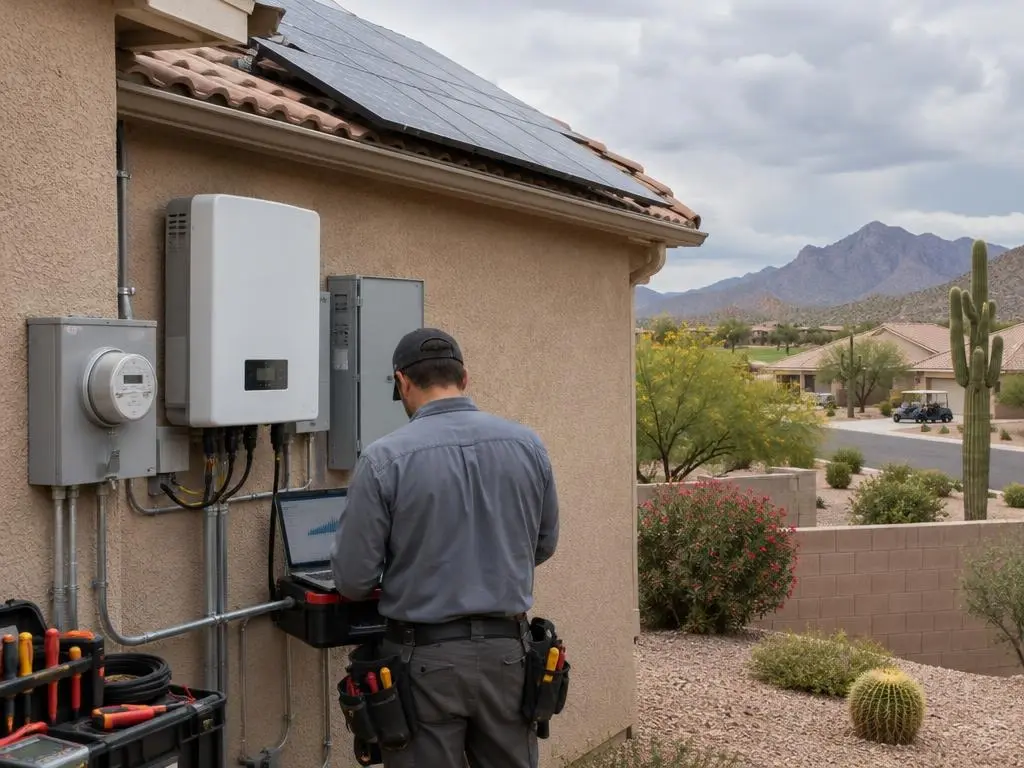
String inverters are one box, usually by the meter or in the garage. HomeGuide puts their lifespan at about 10 to 15 years. Replacing one is a ground-level job.
Microinverters sit under each panel. HomeGuide estimates 15 to 25 years for them, and their warranties tend to run much longer than string units. When one fails, only that panel stops, but reaching it means working on the roof and sometimes lifting the panel.
Optimizer systems pair a small device under each panel with a central inverter. The central unit is the usual failure, though optimizers can fail too.
In many cases the right move is the same type of inverter, matched to the existing array. Changing types, adding a battery-ready inverter or going larger is possible, but it changes the paperwork.
The utility side of a replacement
If your utility is APS, its interconnection rules describe a minor modification as a swap that keeps the same AC nameplate ratings, listings and capabilities. Its solar page says a change that grows the system by more than 1 kW or 10 percent, whichever is greater, needs a new interconnection application, and smaller changes are handled through an Equipment Amendment form. The rules also call for a local electrical permit and inspection, and say not to energize a system before APS approves it. Where we can, we match the new unit to your existing approval so the paperwork stays simple, and we explain which form applies before you commit.
Check the warranty first
String inverter warranties commonly run 5 to 10 years, and microinverter warranties often run 15 to 25 years. Before you pay for a replacement, find the serial number on the unit's label. If it may still be covered, we will tell you and help you gather the information for the claim. Labor is not always included in those warranties, so we can quote the labor side separately.
What Inverter Replacement Includes
Each quote breaks the job into these parts so you can see where the money goes.
Fault diagnosis
Reading codes, testing string voltage and checking breakers and the disconnect to confirm the inverter is actually the failed part.
String inverter swap
Removing the old unit, mounting a compatible replacement, reconnecting DC and AC wiring, and setting it up for your utility's grid settings.
Microinverter replacement
Finding the failed units from monitoring data, lifting panels where needed and swapping the microinverters underneath.
Optimizer and inverter pairs
Replacing the central inverter or individual optimizers on systems that use panel-level electronics.
Placement and shading
Relocating or shading the inverter when the current spot bakes in afternoon sun.
Monitoring reconnection
Getting the new unit back on Wi-Fi or cellular so you can see production again in the app.
Typical Inverter Replacement Costs
| Job | Typical range |
|---|---|
| Single microinverter replacement | $150 - $350 |
| String inverter replacement | $800 - $2,500 |
| Inverter replacement (average) | $1,500 - $3,000 |
| Power optimizer, per panel | $50 - $150+ |
National ranges from HomeAdvisor and HomeGuide. Ranges vary with inverter type and size, roof access, permit needs and whether warranty covers the part. Your written estimate is the price.
How Inverter Replacement Works
1. Confirm the failure
We test the inverter and the wiring around it so a breaker or ground fault is not mistaken for a dead unit.
2. Check warranty and paperwork
Serial numbers, manufacturer coverage and your existing utility approval are checked before we order anything.
3. Quote and order
You get a written price for the matching replacement, plus any permit or utility steps the change requires.
4. Install and commission
The new unit goes in, wiring is torqued and labeled, and the inverter is set up and tested under load.
5. Inspection and handoff
If the change needs a permit, the inspection is done before final sign-off, and we show you how to read the new display or app.
Inverter Replacement Questions
Can I just replace the inverter and keep my old panels?
Usually yes. The replacement has to match the panels' voltage and current and the size of the original system, which is how most swaps stay within the existing utility approval. Older panels often have plenty of life left even when the inverter is done.
Should I switch from a string inverter to microinverters?
Sometimes it makes sense, especially with shade or panels facing different directions. It costs more and changes the paperwork with the utility and the building department, so for most working arrays a matched string replacement is the simpler fix.
How long does an inverter replacement take?
The install itself is often a few hours for a string unit. The wait is usually for the part and any permit or inspection, so we give you a schedule with the estimate.
Will a new inverter work with a battery later?
Some do and some do not. If you think you may add storage, tell us before we quote so we can price a battery-ready option alongside a straight replacement.
My inverter shuts off on hot afternoons. Is it failing?
Not always. Many inverters reduce output or pause when the air around them gets too hot. If it only happens on the hottest days and comes back on its own, shade or relocation may fix it. If it happens on mild days too, the unit likely needs replacing.
Inverter Replacement Service Areas
- Solar Panel Repair in Surprise, AZ
- Solar Panel Repair in Sun City West, AZ
- Solar Panel Repair in Sun City Grand, AZ
- Solar Panel Repair in Sun City Festival, AZ
- Solar Panel Repair in El Mirage, AZ
- Solar Panel Repair in Waddell, AZ
- Solar Panel Repair in Wittmann, AZ
- Solar Panel Repair in Buckeye, AZ
- Solar Panel Repair in Verrado, AZ
- Solar Panel Repair in Goodyear, AZ
- Solar Panel Repair in Litchfield Park, AZ
- Solar Panel Repair in Estrella, AZ
- Solar Panel Repair in Marley Park, AZ
- Solar Panel Repair in Corte Bella, AZ
- Solar Panel Repair in Wickenburg, AZ
- Solar Panel Repair in Morristown, AZ
- Solar Panel Repair in Tonopah, AZ
- Solar Panel Repair in Palm Valley, AZ
Get a Inverter Replacement Estimate
Send a photo of the inverter screen and its label and we will start from there.