
Low production, fault codes, dead monitoring
Solar Output Troubleshooting in Surprise, AZ
A lower number on the app or a higher electric bill has a cause. We track it down before anyone replaces parts.
- Free written estimate after we look at the inverter, the array and the monitoring data
- Itemized pricing: parts, labor, roof work and any permit or utility paperwork on separate lines
- We tell you before work starts whether a permit, inspection or utility form applies to your repair
Finding Out Where the Power Went
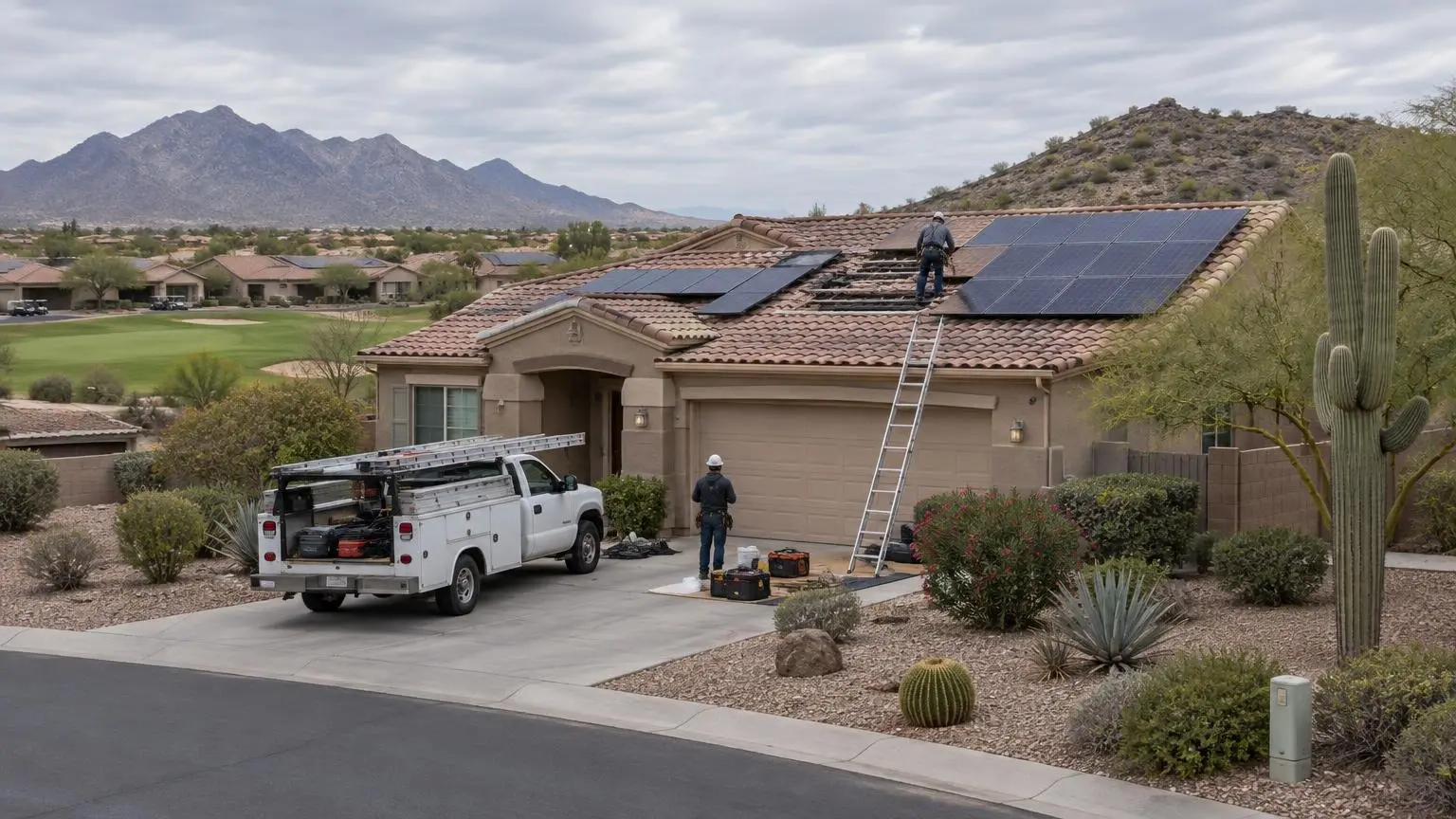
Solar Output Troubleshooting is what we do when a system in Surprise is running but making less than it should, or when it is hard to tell whether it is running at all. The symptom is usually a number: lower daily kilowatt-hours in the app, a summer bill that crept up, or a monitoring screen that stopped updating months ago. Those symptoms can come from a dozen different causes, some of them free to fix and some of them expensive, so we start by narrowing it down.
Sudden drop or slow fade
The shape of the decline tells us a lot.
- Sudden drop to zero: often a tripped breaker, an open AC disconnect, a failed inverter or a lost grid connection.
- Sudden drop by a fraction: often one string out, a failed microinverter or optimizer, or a bad connector.
- Slow fade over months: dust and grime, aging panels, or a heat-related problem getting worse each summer.
- Drop only on hot afternoons: the inverter may be scaling back because the air around it is too hot.
Some decline is expected. Solar cells lose a bit every year as they age; a 2021 kWh Analytics study put median residential system losses at about 1 percent a year. Winter output is lower too. What we look for is a drop larger than those.
What we test
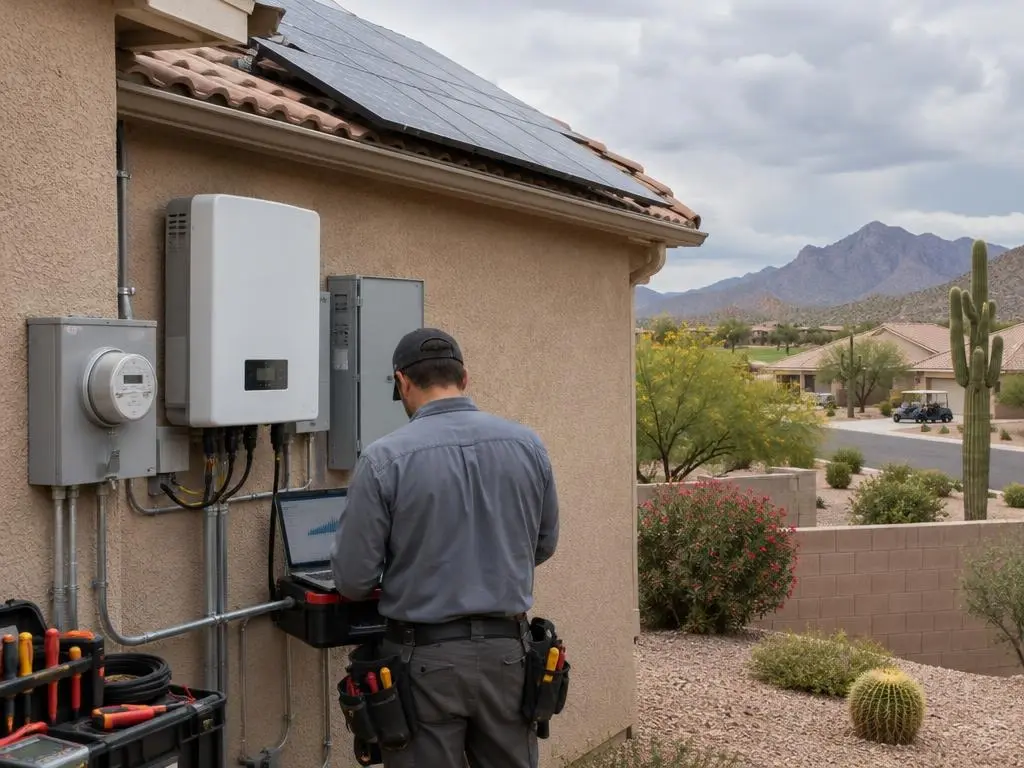
- Inverter status, error history and settings
- Voltage and current on each string, compared with what the panels should produce
- Breakers, fuses, the AC disconnect and the connection at the main panel
- Connectors and wiring along the roof and conduit runs
- The panels themselves for cracks, browning, hot spots or heavy soiling
- Monitoring hardware and the home's Wi-Fi or cellular link
When the monitoring is the problem
Sometimes a system that looks dead is producing fine and has simply stopped reporting. A new internet router, a changed Wi-Fi password or a retired cellular network can cut the link. We reconnect it and confirm the system is actually producing, because a working app is the easiest way to catch the next problem early.
Reading your electric bill
Your bill can help confirm what the inverter says. If you are on APS, it credits exported solar energy on the bill in the month it is generated, under either the Resource Comparison Proxy export rate or the net billing option, and the credits roll over. If exports fell sharply while your usage did not change, the system is probably underproducing. Bring a few recent bills and the same months from last year, and we will compare them with the inverter data. Keep in mind that a bill can also rise because of rate or plan changes, which is not a solar fault.
Systems without paperwork
Plenty of Northwest Valley homes came with solar already on the roof, or the original installer has closed. You do not need the original design to troubleshoot it. We read the labels on the panels and inverter, count strings, and work out the expected output from there.
After the diagnosis
You get a short written summary of what we found and what fixing it will cost. Sometimes the fix happens on the same visit, like resetting a breaker or reconnecting monitoring. Larger repairs are priced separately so you can decide.
What Troubleshooting Covers
These are the checks we run, roughly in order from easiest to most involved.
Data review
Comparing monitoring history and electric bills against the same months in earlier years.
Inverter check
Reading fault codes, event logs and settings, and checking for heat-related shutdowns.
String testing
Measuring voltage and current on each string to find a panel, connector or string that is down.
Array inspection
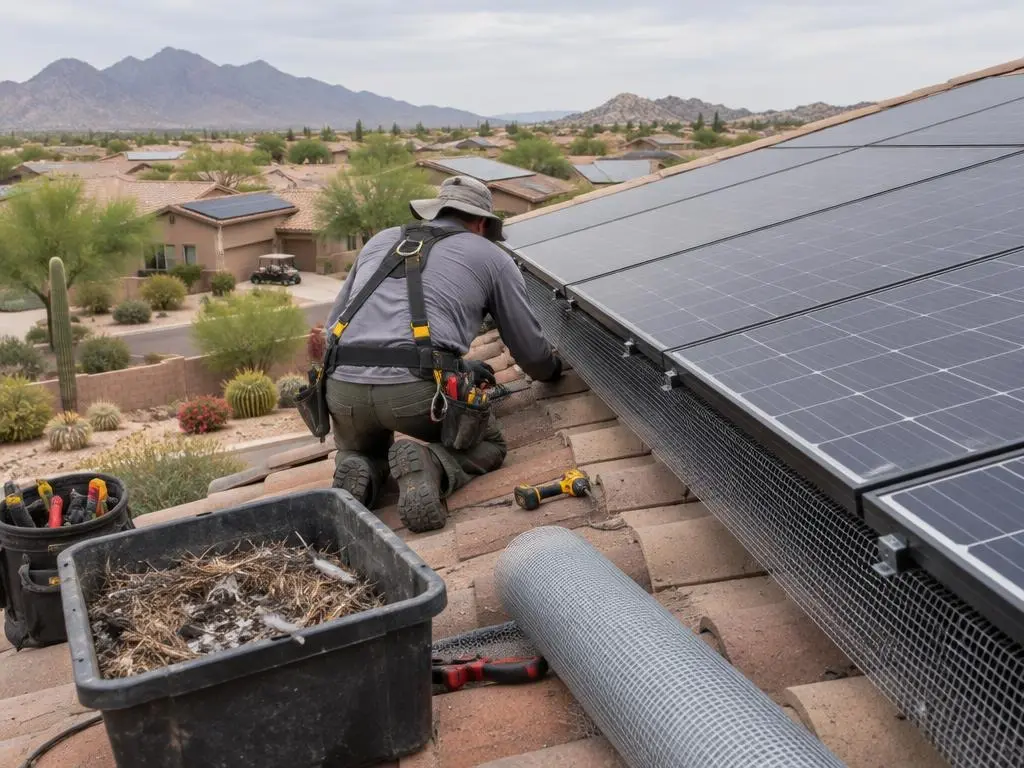
Looking for cracked glass, browned cells, scorched junction boxes, soiling and nesting damage.
Monitoring repair
Reconnecting gateways and communication units to your network so the app reports again.
Typical Troubleshooting Costs
| Job | Typical range |
|---|---|
| Solar system inspection | $150 - $350 |
| Annual inspection (up to $750 if repairs are suspected) | $150 - $300 |
| Solar repair labor, per hour | $80 - $120 |
| Inverter not communicating | $500 - $3,000 |
| No voltage from the system | $400 - $3,000 |
National ranges from HomeGuide and Fixr. Ranges vary with system size, roof access, how many components need testing and what the fix turns out to be. Your written estimate is the price.
How Troubleshooting Works
1. Share what you see
Send screenshots of the app, inverter codes and a few electric bills if you have them.
2. On-site testing
We check the inverter, strings, breakers, disconnect, wiring and panels.
3. Written findings
You get a plain summary of the cause and the cost to fix it.
4. Fix and confirm
Approved repairs are done, then production is checked against what the system should make.
Solar Output Troubleshooting Questions
How much should my system produce?
It depends on panel count, wattage, roof direction and tilt and the time of year. A quick comparison is the same month last year: allowing for about 1 percent of aging, a big gap points to a fault.
My app shows zero but the inverter light is green. What does that mean?
Most likely the system is running and the monitoring link dropped. Check whether your router or Wi-Fi password changed. If it did not, we can trace the communication problem.
Can dirt really cause a big drop?
In desert dust it can. HomeGuide reports dirty panels losing about 7 to 30 percent or more, and desert sites have seen up to 30 percent. A sudden drop is rarely dirt, though; dust builds up slowly.
Why is my bill higher if the system is working?
Rate plan changes, higher use from cooling or a new appliance, and the way exports are credited can all raise a bill without any solar fault. We compare your production data with the bill so you know which it is.
Solar Output Troubleshooting Service Areas
- Solar Panel Repair in Surprise, AZ
- Solar Panel Repair in Sun City West, AZ
- Solar Panel Repair in Sun City Grand, AZ
- Solar Panel Repair in Sun City Festival, AZ
- Solar Panel Repair in El Mirage, AZ
- Solar Panel Repair in Waddell, AZ
- Solar Panel Repair in Wittmann, AZ
- Solar Panel Repair in Buckeye, AZ
- Solar Panel Repair in Verrado, AZ
- Solar Panel Repair in Goodyear, AZ
- Solar Panel Repair in Litchfield Park, AZ
- Solar Panel Repair in Estrella, AZ
- Solar Panel Repair in Marley Park, AZ
- Solar Panel Repair in Corte Bella, AZ
- Solar Panel Repair in Wickenburg, AZ
- Solar Panel Repair in Morristown, AZ
- Solar Panel Repair in Tonopah, AZ
- Solar Panel Repair in Palm Valley, AZ
Get a Solar Output Troubleshooting Estimate
Screenshots of the app and a recent electric bill help us start before we arrive.